

We spend a lot of time in our columns talking about the nature of science, especially its practice. We are probably among the few or even the only scientists that you have ever gotten to know. We, both of us, have been scientists all of our lives. We haven’t just written about science; we have, indeed, practiced it. So, we would like to think that we can explain it to you.
We, as often as possible, try to work what is called “the scientific method” into our columns That, in an ideal world, is the procedure that scientists follow in solving scientific problems. We want you to see and understand how we and other researchers solve problems. In the end our purpose is for you to learn and more fully understand this grand edifice that is called science.
But what happens when things go wrong. Sometimes, and this can be common – and we shudder to admit this – scientists are wrong! And, worse, that actually includes us. We have made mistakes several times in our nine years and more than 400 columns with the Mountain Eagle. Let’s talk about one of them this week and another one in the next column.
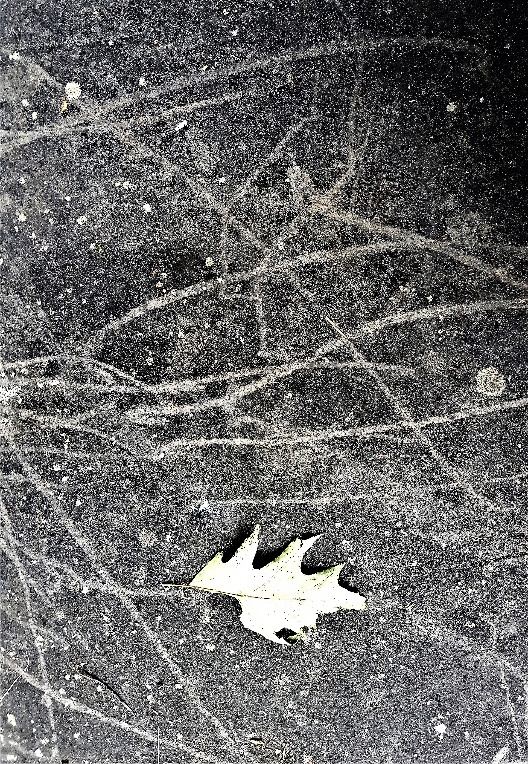
In early January of 2018 we visited an old pond that was out back of the ruins of the Hotel Kaaterskill on South Mountain. There we found a rock surface that had been passed over by an advancing glacier. The ice had ground into the bedrock to create a surface that we illustrated. See our photo. We found some very interesting structures exposed on that surface. They appeared to us to be fossil burrows. Some ancient creatures, back during the Devonian time period, had, we thought, dug their ways through the muddy sands of an old stream channel and disturbed those sediments. The imprints later hardened into sandstone and had lain there for almost 400 million years waiting for us to find them. These sorts of things are called trace fossils; they don’t record evidence of the bodies of ancient animals but instead they record evidence of their activities. We struggled to guess what kind of animal made those supposed burrows and what they were doing when they made them.

We published that column and as the years passed by, we gave it little thought. But last year we became aware of a facebook page called “ichnology.” That page is devoted to the study of trace fossils. We thought that we would send our photo in and see if anybody could help us with these specimens. The response was quick and authoritative. A geology professor from Colorado very politely wrote that he had spent a lot of time with this sort of thing and that these “fossils” were, indeed, the traces of animal activities But they were not fossils, they were the traces of modern snails that had crawled across the bedrock. These snails were herbivores, they had scraped up living algae and consumed them as food, leaving those impressions.
We had simply misidentified these traces. That’s a common enough mistake and we are not ashamed of ourselves for making it. But we have learned something and will never make that error again. Still, we feel that we have to report that mistake to you. Cancel that old column; it was wrong. This bit of faulty science has just been self-corrected. This concept of “self-correction” is fundamental to all sciences; it’s central to the way they work. But next time – it gets worse.
Contact the authors at randjtitus@prodigy.net. Join their facebook page “The Catskill Geologist.” Read their blogs at “thecatskillgeologist.com.”