

We are now seeing the United States Department of War taking action against Iran. As I reflect on this development, I hope we can come together as a country and move away from the divisive rhetoric that seems to dominate our conversations.
It’s possible to disagree about entering a long-term war without deepening the divisions among us. With troops being deployed into harm’s way, I believe we all share the same hope: that they remain as safe as possible.
While watching the State of the Union address, I found myself troubled by the number of “F--- ICE” signs displayed in the chamber.
I struggle to understand why that kind of language is necessary. Does using profanity make the message any stronger than simply stating opposition to current immigration enforcement policies?
In my view, that language is not appropriate for elected officials. You might expect to hear it in certain work environments, but seeing it broadcast across national airwaves from members of our government feels different.
I don’t see it as a sign of pride. Instead, it risks normalizing language that, when I was growing up, would not have been considered acceptable conduct for public servants.
For an update on some veteran’s information, the VFW commends VA for rescinding its interim final rule that would have changed how disability ratings are evaluated, a move the VFW warned could unfairly reduce benefits for disabled veterans.
More than 20,000 public comments were submitted urging the policy’s withdrawal after widespread concern from veterans and service organizations.
VFW National Commander Carol Whitmore thanked VA Secretary Doug Collins for listening to veterans and reversing what she called an abrupt change with potentially unintended consequences.
While praising the decision as a significant step forward, the VFW pledged to continue working with Congress and VA to ensure future policy changes prioritize transparency, meaningful veteran input and the protection of earned benefits.
While this reversal is a significant step forward, the VFW will continue to work with Congress, VA, and other stakeholders to ensure that future policy changes are developed with full transparency, genuine veteran input and a steadfast commitment to protecting the benefits and well-being of all veterans.
A reminder that our post will be holding our monthly bingo on Thursday March 19t at 6 p.m. Come and have some fun playing bingo and also we have the Queen of Hearts Game which is rising towards $1,600 of which you will receive 60%.
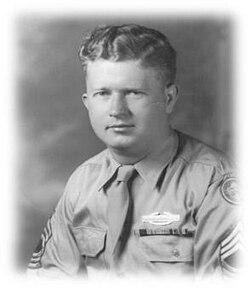
Roderick W. "Roddie" Edmonds was presented with the Congressional Medal of Honor at the White House this past week. Here is his story. At age 22, Edmonds enlisted in the Army on March 17, 1941, at Fort Oglethorpe in Georgia.
Edmonds, along with other inexperienced troops, arrived in the European Theater of Operations in December, 1944, with the 106th Infantry Division, arriving only five days before Germany launched a massive counteroffensive, the Battle of the Bulge.
During the battle, where much of the division was overrun, on December 19, 1944, Edmonds was captured and sent to Stalag IX-B, a German prisoner-of-war (POW) camp.
Shortly thereafter, he was transferred, with other enlisted personnel, to another POW camp near Ziegenhain, Germany: Stalag IX-A. As the highest ranking soldier at the new camp, Master Sergeant Edmonds was in command, responsible for the camp's 1,275 American POWs.
On their first day in Stalag IX-A, January 27, 1945—as Germany's defeat was clearly approaching—Commandant Siegmann ordered Edmonds to tell only the Jewish-American soldiers to present themselves at the next morning's assembly so they could be separated from the other prisoners.
Instead, Edmonds ordered all 1,275 POWs to assemble outside their barracks. The German commandant rushed up to Edmonds in a fury, placed his pistol against Edmonds's head and demanded that he identify the Jewish soldiers under his command. Instead, Edmonds responded, "We are all Jews here," and told the commandant that if he wanted to shoot the Jews he would have to shoot all of the prisoners.
He then warned the commandant that if he harmed any of Edmonds' men, the commandant would be prosecuted for war crimes after the conflict ended—since the Geneva Conventions required prisoners to give only their name, rank, and serial number; religion was not required.
The commandant backed down. Edmonds' actions are credited with saving up to 300 Jewish-American soldiers from possible death. After 100 days of captivity, Edmonds returned home after the war but kept the event at the POW camp to himself.
Keep all serving our country in your thoughts and prayers. God Bless America
Marc Farmilette, PDC – Commander VFW Post 1545.

Master Sergeant Roderick Waring Edmonds